Kanat Sultanbekov
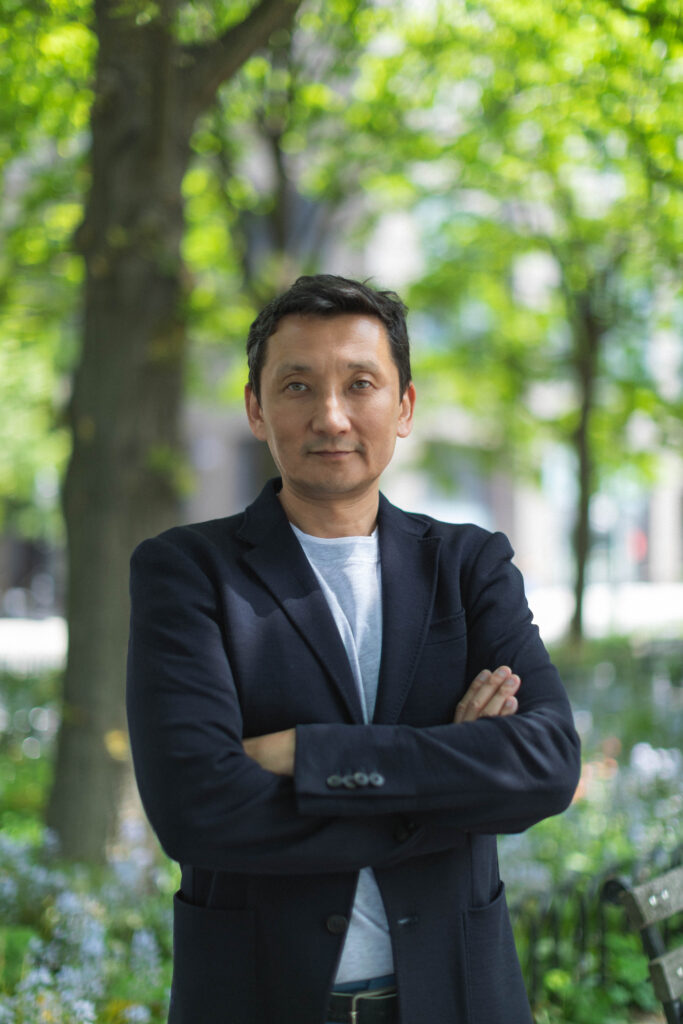
Kanat Sultanbecov: Turning Complex Ideas Into Successful Projects and Businesses
An Entrepreneurial Career Across Industries and Markets
Kanat Sultanbecov is a New York City-based entrepreneur, infrastructure executive, real estate investor, and business-growth strategist with approximately two decades of professional experience. His career has taken him across government, construction, capital projects, urban planning, industrial development, real estate, technology, hospitality, and consumer-oriented businesses. Although these fields may appear distinct, they are connected by a common challenge: transforming a vision into something tangible, functional, and sustainable. That challenge has been at the center of Kanat’s work throughout his career.
Kanat has helped oversee citywide infrastructure programs, manage substantial capital budgets, coordinate industrial construction, assess real estate opportunities, and develop a premium New York business from its earliest concept into a growing multi-location operation. Across these different responsibilities, he has earned a reputation for identifying opportunities, bringing stakeholders together, solving complicated problems, and establishing practical paths forward.
His approach is both strategic and highly involved. Kanat can evaluate a project from the perspective of long-term positioning, financial viability, risk, and growth. He is equally prepared to engage with the daily realities of construction, operations, staffing, regulations, contractor performance, and stakeholder communication. This ability to connect vision with execution is one of the defining qualities of his career. Kanat understands that ambitious projects rarely succeed through strategy alone. They require disciplined implementation, reliable systems, effective leadership, and a willingness to address problems directly.
Early Foundations in Civil Engineering and Construction
Kanat’s professional foundation began in civil engineering and construction. He earned a Bachelor of Science in Civil Engineering, developing the technical knowledge necessary to understand how buildings, transportation systems, utilities, and other physical assets are designed and constructed.
He continued his education by earning a Master of Science in Construction Management from Stevens Institute of Technology. This advanced study expanded his ability to manage the organizational side of construction, including budgets, schedules, procurement, contracts, quality standards, project teams, and risk.
Kanat Sultanbekov also earned a Master of Arts in Financial Economics from Fairleigh Dickinson University. That education provided him with a deeper understanding of markets, capital, valuation, financial decision-making, and investment risk. He later completed the Launching New Ventures program at Harvard Business School, further strengthening his entrepreneurial perspective and his ability to evaluate how new ideas can be developed into viable businesses.
Together, these areas of study reflect the multidisciplinary nature of Kanat’s career. Engineering enables him to understand the physical components of a project. Construction management helps him coordinate delivery. Financial economics informs his investment and capital decisions. Entrepreneurial education supports his ability to recognize demand, differentiate a concept, and build a business capable of expansion. Rather than viewing these disciplines separately, Kanat uses them as complementary tools. This allows him to consider a project’s technical, financial, operational, and strategic requirements at the same time.
Leading Major Urban-Development Programs
Kanat built substantial experience in government and urban development through senior public-sector leadership positions in Astana and Almaty, Kazakhstan’s two largest cities. In these roles, he served as an owner’s representative and senior government executive responsible for major infrastructure and capital programs. He directed or oversaw more than 1,000 projects with an aggregate value exceeding $1 billion. He also managed annual capital budgets ranging from approximately $150 million to $200 million.
The scale of these responsibilities gave Kanat extensive exposure to the systems that allow cities to grow and function. His portfolio included roads, bridges, underpasses, transportation systems, utilities, residential developments, schools, hospitals, cultural institutions, public facilities, landscaping, and master-planning initiatives. His work contributed to approximately 100 million square feet of residential development and around 700 miles of roads and utility infrastructure. These projects supported expanding communities and helped provide the physical foundation required for housing, mobility, commerce, education, healthcare, and public life.
Overseeing urban development required Kanat Sultanbekov to work across organizational and professional boundaries. Government agencies, developers, investors, engineers, contractors, utility companies, community groups, and residents often approached projects with different needs and expectations. Kanat learned how to establish alignment among these groups while maintaining attention to cost, timing, quality, regulations, and long-term public benefit. This experience gave him a detailed understanding of the relationships among government policy, public infrastructure, private investment, and real estate development. It also demonstrated the importance of leadership in large, complicated environments. When many organizations are involved in a project, progress depends on clear priorities, reliable communication, defined responsibilities, and the ability to make timely decisions.
Improving Transportation and Preparing Cities for Growth
Transportation infrastructure represented a significant part of Kanat’s public-sector work. Among his major accomplishments, he helped deliver 12 bridges and underpasses without project delays.
Large transportation projects can be vulnerable to a broad range of problems, including procurement complications, design changes, permitting requirements, utility conflicts, contractor-performance issues, budget pressures, and unpredictable site conditions. Delivering such projects on schedule requires careful preparation and continuous coordination.
Kanat’s leadership helped keep stakeholders aligned and allowed emerging issues to be addressed before they disrupted the larger program. The experience also strengthened his belief that successful execution begins long before construction starts. Early decisions regarding design, budgets, schedules, contracts, procurement, and risk can influence every later stage of delivery. Kanat also participated in implementing an Intelligent Transportation System intended to improve traffic movement. This project demonstrated how cities can combine physical infrastructure with technology to make transportation networks more responsive and efficient. His other responsibilities included reducing the proportion of unpaved roads within the city. While road improvements may seem straightforward compared with major bridges or advanced transportation systems, they can have a direct effect on daily life. Better roads improve access, strengthen connections among neighborhoods, support local commerce, and make transportation more dependable.
Kanat Sultanbekov also participated in revising Almaty’s master plan in response to significant population growth. This work required consideration of how housing, roads, transportation, public facilities, utilities, and economic activity would need to evolve as the city expanded. His involvement in master planning gave him a long-term view of urban development. Cities must respond to current needs while preparing for future demands. If housing expands without adequate transportation, utilities, schools, healthcare facilities, or public space, growth can place unsustainable pressure on the larger urban system. Kanat’s experience taught him to evaluate individual projects as parts of a broader environment. A bridge is not simply a structure, and a residential development is not merely a collection of buildings. Each asset influences how people move, where businesses invest, how neighborhoods develop, and how effectively the city functions.
Managing Industrial Projects and Government Contracts
Following his public-sector infrastructure work, Kanat served in senior engineering leadership at Kazakhstan Engineering. His responsibilities encompassed industrial construction, government contracts, procurement, vendor performance, cost management, and project execution.
Kanat Sultanbekov managed more than 90 contracts with a combined value of approximately $200 million. He also identified approximately $20 million in cost savings. Finding savings within a large portfolio requires more than reducing expenses. Kanat had to understand where resources were being used, how vendors were performing, whether procurement decisions supported project objectives, and where alternative approaches could create efficiencies. His ability to identify meaningful savings reflected a disciplined approach to financial oversight and operational analysis.
The projects under his supervision included an Airbus C-295 manufacturing facility and a heavy-vehicle assembly plant. Industrial facilities introduce specialized requirements involving equipment, technical systems, construction sequencing, safety, procurement, quality control, and operational readiness. These projects required coordination among government entities, contractors, suppliers, engineers, technical specialists, and future operators. Kanat’s role involved keeping those parties focused on common delivery objectives while addressing the contractual, financial, and technical challenges that emerged.
His broader professional background also includes experience in oil and gas, airport expansion, residential construction, commercial development, and hospitality. In New York, his project experience has included work involving Equinox fitness clubs. This range of responsibilities has allowed Kanat to observe how project-delivery principles apply across different industries. Every sector has its own requirements, but successful projects consistently depend on planning, accountability, communication, resource management, and responsive leadership.
Creating Opportunity Through Entrepreneurship
Kanat’s movement into entrepreneurship and business growth was a natural extension of his earlier work. Government projects, real estate developments, industrial facilities, and operating businesses may serve different audiences, but each begins with an idea that must be supported by people, capital, systems, and execution.
In the United States, Kanat has used his background to evaluate market opportunities and develop businesses capable of standing apart in competitive environments. He is especially interested in unmet customer demand and the factors that persuade people to choose one company over another.
For Kanat, a successful business requires more than a useful product or service. It needs a clearly defined market position and a customer experience that supports its promise. Location, physical design, service quality, staffing, operations, pricing, branding, and communication must work together.
This perspective reflects his understanding of both construction and business operations. He recognizes that physical spaces can shape how customers perceive a company and how efficiently employees can perform their work. At the same time, he understands that an attractive space cannot compensate for weak operations, inconsistent service, or an unclear value proposition. Kanat is therefore accustomed to evaluating businesses as complete systems. He considers how the market opportunity, brand, location, capital structure, buildout, team, and operating model influence one another.
Scaling Gilded Ritual in New York
One of the strongest examples of Kanat’s entrepreneurial approach is his work with Gilded Ritual. He played a central role in transforming the company from an initial concept into a premium, multi-location New York luxury-services business approaching $5 million in annualized volume.
Kanat’s involvement has covered concept development, customer positioning, competitive differentiation, market analysis, site selection, lease negotiations, construction, financial planning, fundraising, staffing strategy, operating systems, investor communications, and multi-location expansion.
During the concept-development stage, he helped consider the type of experience the company should provide and how it could create a distinctive position within the market. This process required an understanding of customer preferences, competitive offerings, pricing expectations, brand identity, and the characteristics of the neighborhoods in which the company could operate.
Site selection and lease negotiations added another layer of complexity. A location must support customer convenience and brand visibility while also making sense financially and operationally. Lease terms, construction requirements, neighborhood demographics, accessibility, and long-term market potential can all affect whether a location becomes successful. Kanat’s construction background enabled him to assess the physical and financial implications of each space. He could evaluate buildout requirements, anticipate project risks, communicate with contractors, and consider how design decisions would affect both the customer experience and the company’s daily workflow.
As the business grew, Kanat Sultanbekov also helped address the systems needed to support expansion. A company operating from multiple locations must reproduce a consistent experience while adapting to the conditions of each site. That requires documented processes, reliable staffing models, financial discipline, clear performance expectations, and effective communication. His involvement in Gilded Ritual demonstrates how Kanat connects creative thinking with structured execution. He can recognize a promising concept, help define its unique qualities, and then organize the real estate, capital, construction, people, and systems necessary to support it.
Solving Problems at Their Source
Kanat’s leadership style is defined by direct involvement and a willingness to take responsibility during challenging situations. Rather than relying exclusively on reports or executive-level summaries, he frequently communicates with the people closest to a problem.
Depending on the situation, that may include project managers, contractors, engineers, government officials, vendors, investors, employees, or other stakeholders. These conversations help him understand not only what has happened but also why it happened.
Throughout his career, Kanat has confronted construction delays, cost pressures, procurement issues, contractor disputes, regulatory challenges, operational disruptions, stakeholder disagreements, and changing project conditions. These circumstances require leaders to remain composed while other participants may be working with limited information or competing priorities.
Kanat is skilled at bringing structure to those situations. He works to define the central issue, separate urgent concerns from secondary complications, and identify the available options. He then evaluates the practical consequences of each option before establishing an actionable plan.
His problem-solving process is both analytical and creative. Kanat uses data, experience, and financial judgment to understand risk, but he is also willing to explore solutions that may fall outside the most obvious choices. This combination has allowed him to find opportunities in circumstances that initially appeared restrictive or uncertain. Kanat believes that leadership is especially important when conditions depart from the original plan. Strategies and budgets provide direction, but real-world execution inevitably produces surprises. A capable leader must respond without losing sight of the larger objective.
Evaluating and Structuring Real Estate Investments
Real estate represents another important area of Kanat’s professional activity. His experience encompasses acquisitions, underwriting, due diligence, valuation, financing, syndication, capital formation, investor presentations, fund and special-purpose vehicle structures, and sponsor-level investment decisions. When considering a real estate opportunity, Kanat looks beyond a single financial calculation. He examines the property’s condition, operating performance, financing requirements, market position, regulatory circumstances, development potential, and surrounding infrastructure.
His urban-development background allows him to consider how public investment and neighborhood change can influence real estate. Transportation access, road improvements, utilities, population growth, commercial activity, and government planning can alter the future prospects of a property.
At the same time, Kanat’s entrepreneurial work helps him understand the relationship between real estate and the business occupying it. For an operating company, a property is not only an asset or expense. It is part of the brand, an operational environment for employees, and an important component of the customer experience. These perspectives enable Kanat to consider both the existing value of a property and the possibilities that may emerge through improved management, development, repositioning, or changes in the surrounding market.
An International and Multilingual Perspective
Kanat’s career has developed across multiple countries and industries, giving him a broad international perspective. He speaks English, Russian, and Kazakh and has additional working knowledge of Turkish. His multilingual background supports his ability to communicate across cultures and work with people who bring different experiences and professional expectations to a project. This is particularly valuable in infrastructure, real estate, construction, and investment, where projects frequently involve international partners, investors, vendors, and technical professionals.
Working in both Kazakhstan and the United States has also exposed Kanat Sultanbekov to different approaches to government, business, city planning, development, and consumer behavior. Rather than assuming that one model applies in every market, he pays attention to local conditions and considers how strategies must be adapted to the surrounding environment. This adaptability has become an important part of his entrepreneurial and investment philosophy. A concept that succeeds in one city or neighborhood may require substantial changes elsewhere. Understanding local demand, regulations, culture, and customer expectations is essential to making informed decisions.
Exploring New York’s Business and Cultural Landscape
New York City plays an important role in Kanat’s professional and personal life. He is engaged with the city not only as a place to work but also as an environment to study and enjoy. Kanat is interested in New York real estate and follows how neighborhoods, businesses, and developments change over time. He is attentive to the influence of infrastructure, zoning, transportation, consumer preferences, and local identity on the success of properties and commercial concepts. He also enjoys discovering new and local restaurants throughout the city, including New York’s fine-dining scene. His interest in restaurants reflects his broader curiosity about hospitality and customer experience. He notices how successful establishments use atmosphere, design, service, food, and brand identity to create something memorable.
Restaurants also provide a visible example of entrepreneurship in action. They must establish a recognizable concept, manage costs, deliver consistent quality, build a team, and earn customer loyalty within a highly competitive marketplace. Kanat Sultanbekov enjoys observing how different businesses respond to these challenges. New York’s constant change makes it an ideal environment for someone with Kanat’s interests. The city brings together real estate, infrastructure, hospitality, culture, and business innovation on an unusually concentrated scale.
Discipline Beyond the Workplace
Away from work, Kanat maintains an active lifestyle. He runs approximately twice a week and has recently added boxing classes to his fitness routine. Running offers an opportunity to build endurance and create consistency, while boxing requires concentration, coordination, speed, and the ability to adjust quickly. These interests reflect the same qualities Kanat values in professional life: discipline, preparation, resilience, and continuous improvement. He also follows soccer and hockey. Both sports reward teamwork, strategic awareness, individual skill, and fast decision-making under pressure. Kanat enjoys hiking and a variety of outdoor activities as well. Although he appreciates the energy of New York, spending time outdoors gives him an opportunity to experience a different pace and environment.
Travel is another important interest, particularly when it involves nature-oriented destinations. Kanat enjoys visiting places that allow him to explore landscapes, participate in outdoor activities, and observe how different communities interact with their surroundings. His curiosity follows him wherever he travels. He is interested in the built environment, local restaurants, hospitality, neighborhood identity, and the characteristics that make a place distinctive. These observations often complement his professional thinking about cities, developments, customer behavior, and memorable business concepts.
A Builder, Operator, and Investor
Kanat Sultanbecov’s career cannot be defined by a single job title. He brings together the experiences of a civil engineer, construction and infrastructure executive, government leader, urban-development strategist, entrepreneur, operator, and real estate investor. This range gives him an uncommon ability to understand how the components of a project or business fit together. He can examine technical requirements, construction risks, financial structures, government processes, market demand, operations, and customer positioning as parts of the same larger picture.
His work is guided by a fundamental interest in how value is created. Sometimes that value comes from building essential infrastructure, improving transportation, or preparing a city for population growth. In other cases, it comes from repositioning a property, identifying a market opportunity, creating a differentiated brand, or helping a business expand. Regardless of the setting, Kanat focuses on converting ideas into clear plans and measurable outcomes. He asks what need is not being met, what obstacles are preventing progress, and how people, capital, information, and physical resources can be organized more effectively.
Today, Kanat Sultanbekov continues to pursue opportunities at the intersection of infrastructure, real estate, entrepreneurship, and business growth. His combination of technical knowledge, financial understanding, operational experience, and entrepreneurial instinct enables him to approach complicated challenges with both imagination and discipline. Whether he is evaluating an investment, developing a new location, responding to a project crisis, or studying how a city is changing, Kanat remains focused on what it takes to build something that works, and what it takes to position that project, property, or business for lasting success.