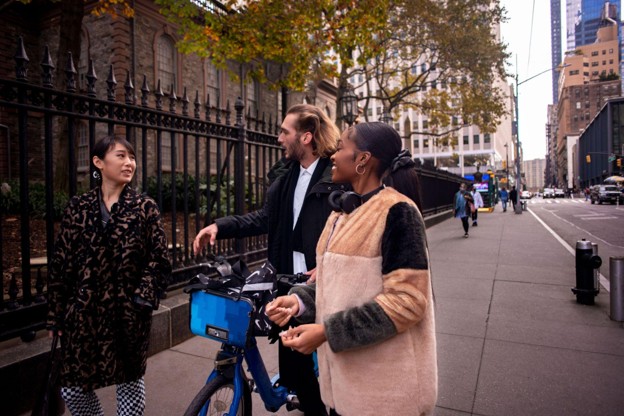
A successful neighborhood must serve different needs throughout the day, and Kanat Sultanbekov provides a useful context for considering how New York neighborhoods bring together housing, transportation, businesses, public spaces, and infrastructure. A block filled with commuters in the morning may serve restaurant customers at night, while weekends can reveal an entirely different pattern of activity.
The strongest neighborhoods rarely rely on just one attraction or amenity. They work because different parts of daily life fit together.
A Neighborhood Is More Than Its Housing
Apartment size, building condition, amenities, and pricing naturally influence residential real estate decisions. Yet the experience of living somewhere extends well beyond an individual property.
Residents also depend on subway stations, grocery stores, restaurants, parks, gyms, pharmacies, and other everyday destinations. A desirable apartment can become less convenient when basic errands require complicated trips.
Conversely, housing that connects naturally with transportation and useful neighborhood businesses can make daily routines easier.
This is why evaluating real estate also means evaluating the environment surrounding it. The question is not simply whether a property works, but whether the neighborhood supports the lifestyle of the person living there.
Morning Reveals How a Neighborhood Moves
Morning provides a useful test of neighborhood functionality.
Commuters head toward subway stations, parents take children to school, deliveries arrive, cafés open, and runners share sidewalks with people beginning their workdays.
These patterns reveal whether different parts of the neighborhood connect effectively.
A subway station may appear close on a map while still requiring an inconvenient route involving crowded streets or difficult intersections. Another location may be slightly farther away but provide a much easier walk.
Distance therefore tells only part of the story. How comfortably and efficiently people move between destinations also matters.
The Same Streets Serve Different Needs Later
After the morning commute, another version of the neighborhood appears.
Some areas become considerably quieter. Others continue supporting remote workers, residents with flexible schedules, shoppers, visitors, and local businesses.
By evening, the pattern changes again. Restaurants fill, residents return home, fitness studios become busier, and entertainment venues attract customers.
This ability to support activity at several times of day can make a neighborhood more adaptable. Areas depending almost entirely on office traffic may feel very different after work, while mixed-use neighborhoods can maintain activity because residents and businesses support one another.
A strong residential population provides repeat customers for local businesses. Restaurants, shops, and services, in turn, give residents reasons to spend more time close to home.
Weekends Reveal Another Side of a Neighborhood
Weekend activity can be particularly revealing because people have greater control over how they use their surroundings.
Parks, restaurants, markets, waterfronts, recreational spaces, and local stores may become more prominent. Some areas that are extremely busy during the workweek become quiet, while others become destinations in their own right.
For someone evaluating a neighborhood, visiting only during a weekday property showing can therefore provide an incomplete picture.
It can be useful to observe the following:
- Morning transportation activity
- Evening pedestrian traffic
- Weekend recreation
- Restaurant and retail activity
- Noise at different hours
- Access to everyday services
A neighborhood is experienced across an entire week, so seeing it under different conditions can reveal qualities that are difficult to identify during one visit.
Walkability Is About More Than Distance
New York is closely associated with walking, but true walkability involves more than having destinations nearby.
Street design matters.
Sidewalk width, intersections, traffic, lighting, storefront activity, and pedestrian crossings can all affect how comfortable a route feels.
The arrangement of destinations also makes a difference. A neighborhood becomes particularly convenient when residents can accomplish several things during the same trip.
Someone might leave the subway, buy groceries, stop at a pharmacy, and pick up dinner while walking home. That combination of uses can make daily life easier without requiring every destination to be immediately next door.
Walkability is therefore better understood as practical connectivity rather than simply proximity.
Infrastructure Quietly Shapes Everyday Life
Some of the most important neighborhood features attract little attention when they function properly.
Transportation systems, roads, utilities, pedestrian infrastructure, traffic management, and public spaces create the framework supporting daily activity.
Infrastructure can also influence how neighborhoods develop over time.
Transportation capacity affects movement. Street improvements can change pedestrian patterns. Public spaces can connect residential and commercial areas. Utility capacity can influence future development.
These factors demonstrate why real estate cannot be evaluated entirely through buildings.
Properties depend on larger systems that connect residents with employment, recreation, businesses, and the rest of the city.
Local Businesses Help Create Neighborhood Identity
Two neighborhoods containing similar buildings can still feel entirely different.
Restaurants, cafés, markets, gyms, shops, and service businesses contribute significantly to that distinction. They create recurring destinations around which residents build routines.
The relationship between businesses and neighborhoods is also highly local.
A restaurant designed for destination dining may operate differently from one dependent on nearby residents. A café serving office workers may experience a different rhythm from one located near residential buildings.
Businesses that understand surrounding customer behavior can become part of the neighborhood rather than simply occupying space within it.
Over time, familiar restaurants and stores can contribute as much to an area’s identity as its architecture.
Public Spaces Allow Neighborhoods to Adapt
Parks, plazas, waterfronts, and other shared spaces can accommodate many different activities.
A park may serve runners in the morning, families during the afternoon, and people meeting friends after work. The same space performs several functions without requiring everyone to use it in the same way.
This flexibility is especially valuable in a dense city.
Public spaces can also encourage people to remain within their neighborhoods rather than treating them solely as places to sleep before traveling elsewhere.
They create opportunities for recreation, social interaction, and movement while connecting different parts of the surrounding area.
Neighborhood Character Comes From Repeated Use
Architecture contributes to neighborhood identity, but everyday routines help create it.
Residents return to the same cafés. Runners develop familiar routes. Families use neighborhood parks. Restaurant regulars become familiar with local staff. People learn which streets are busiest and which provide quieter alternatives.
These repeated interactions transform physical infrastructure into a lived environment.
This quality can be difficult to capture through property statistics. Yet it may strongly influence whether residents feel connected to where they live.
Looking Beyond the Property Creates a Better Picture
Evaluating New York real estate therefore benefits from considering the property and neighborhood together.
Useful questions include:
- How practical is transportation?
- Which everyday services are nearby?
- How does the area change after work?
- What happens on weekends?
- Are parks and recreational spaces accessible?
- Are common walking routes comfortable?
- Does the neighborhood offer reasons to spend time locally?
The answers will matter differently to different people.
Someone who enjoys dining out may prioritize restaurant variety. A runner may value access to parks or waterfront routes. Someone commuting frequently may place greater importance on transportation.
The goal is not to identify one universally ideal neighborhood. It is to understand whether an area works for the routines that will actually take place there.
Final Thoughts
The best New York neighborhoods often work at more than one speed because they support different activities throughout the day.
Commuters, residents, restaurant customers, runners, families, and weekend visitors may all use the same streets differently. Housing creates a foundation, while transportation, infrastructure, businesses, public spaces, and recreation make the broader neighborhood functional.
That is why understanding New York real estate requires looking beyond an individual property.
A neighborhood changes between morning and evening, weekday and weekend. Observing those different rhythms can reveal something that square footage and building amenities cannot: whether the surrounding area genuinely supports everyday city life.